Shape Net-Zero Future, Lead the Change!

메인비주얼2

Calendar

연구성과

Research

2026년 05월 20일 수요일

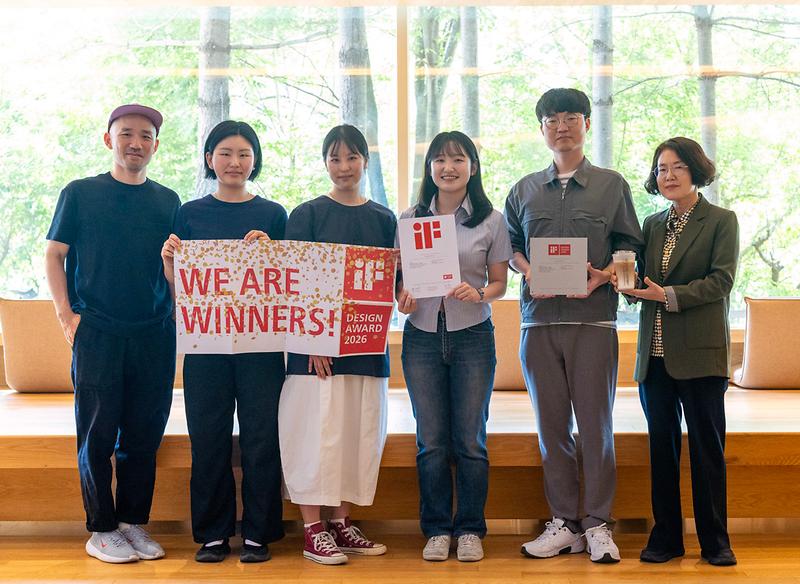
UNIST·울산시 ‘캠퍼스 컵’, 대학 자원순환 모델로 iF 디자인상 수상

UNIST 디자인학과가 울산시 자원순환과와 함께 개발한 다회용 컵 순환 서비스 ‘캠퍼스 컵(Campus Cup)’이 세계적 권위의 ‘2026 iF 디자인 어워드(iF Design Award)’를 받았다. 캠퍼스 컵은 울산 지역과 UNIST 내 카페에서 운영 중인 ‘울산컵’ 서비스의 연장선에서 연구·개발됐다. 디자인학과 이승호 교수가 지도했으며, 기존 울산컵 프로젝트를 수행한 신다영, 박민주, 한민주, 김태근 학생이 참여했다. 이 서비스는 대학 구성원의 자발적인 이용을 바탕으로 설계됐다. 서비스 도입 방식, 컵 반납 동선, 보증금·인센티브 구조 등을 사용자 친화적으로 구성한 것이 특징이다. 다회용 컵 사용의 환경적 효과를 정량적으로 분석할 수 있는 전과정 환경평가 체계를 제안해 정책 결정에도 활용 가능한 데이터 기반 시스템으로 확장했다. 이번 수상은 2023년 과학기술정보통신부·행정안전부·울산광역시가 공동 지원한 ‘과학기술 활용 주민공감 지역문제 해결 사업’의 성과를 바탕으로 이뤄졌다. 울산컵은 연구과제 종료 이후에도 참여 카페에서 지속적으로 운영되고 있으며, 현재까지 누적 3만6천 개 이상의 일회용 컵 사용을 줄이는 효과를 거둔 것으로 나타났다. iF 디자인 어워드는 독일에서 출범한 세계 3대 디자인상으로 꼽힌다. 삼성전자와 애플 등 글로벌 기업들이 매년 참가하는 국제 공모전으로, 제품 디자인뿐 아니라 서비스와 시스템, 사회적 영향까지 종합적으로 평가한다. 캠퍼스 컵은 대학 캠퍼스를 기반으로 확산 가능한 서비스 모델이라는 점에서도 주목받고 있다. 울산대학교와 춘해보건대학교 등 인근 학교를 시작으로 전국 대학으로의 확대 가능성에도 관심이 모아진다. 프로젝트를 주도한 신다영 학생은 “디자인이 단순히 형태를 만드는 것이 아니라, 사람들의 행동과 일상의 시스템을 바꿀 수 있다는 것을 직접 경험한 프로젝트였다”며 “실제 운영되는 서비스 개선에 참여하고, 미래에 필요한 서비스를 제시하면서 디자인의 사회적 역할을 더욱 깊이 이해하게 됐다”고 말했다. UNIST 디자인학과 연구팀과 장기간 협력해 온 울산광역시 관계자는 “울산컵이 행정과 디자인, 시민 참여가 결합된 사례로 현장에서 작동하는 자원순환 모델을 만드는 데 큰 의미가 있다”며 “이어진 캠퍼스 컵의 국제적 수상을 계기로 이러한 모델이 더욱 정교화되고, 대학 캠퍼스를 중심으로 확산되기를 기대한다”고 밝혔다. 이승호 디자인학과 교수는 “이번 프로젝트는 학생들이 실제 사회 문제를 다루며 디자인을 통해 시스템을 설계한 결과”라며 “앞으로도 공공과 협력해 지속가능한 서비스와 정책 디자인을 실험하고 확산해 나가겠다”고 전했다. 한편, 이번 프로젝트는 울산대학교와 UNIST가 공동 운영하는 ‘BTS(Brain to Society) 실전문제연구 프로그램’에서 출발했다. 이후 산업통상자원부와 한국산업기술진흥원(KIAT), 한국디자인진흥원(KIDP)이 추진하는 디지털융합디자인 전문인력양성사업을 통해 국제적 성과로 결실을 맺었다.

2026년 04월 22일 수요일

버려진 바이오자원, 수소와 화학소재로 재탄생!

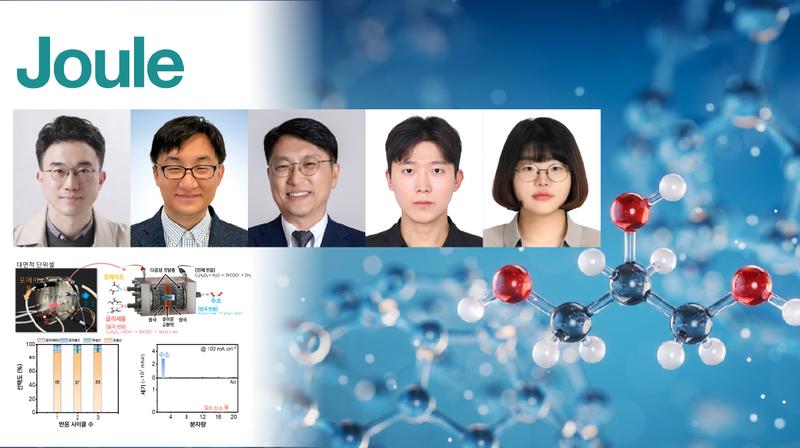
*본 보도자료는 한국재료연구원 주관으로 작성되었습니다. (보도자료 바로 가기) □ 한국재료연구원(KIMS, 원장 최철진) 에너지·환경재료연구본부 수소전지재료연구센터 양주찬 박사 연구팀은 울산과학기술원(UNIST, 총장 박종래) 에너지화학공학과 장지욱, 임한권, 이호식 교수 연구팀과 공동으로, 바이오디젤(식물성 기름 등을 활용한 친환경 연료) 산업 부산물인 글리세롤을 활용해 수소와 고부가가치 화학물질을 동시에 생산할 수 있는 고효율 전기화학 시스템을 개발했다. 이번 연구는 기존 수전해 공정의 핵심 병목이었던 산소 발생 반응(OER, Oxygen Evolution Reaction)을 대체해, 수소 생산 효율을 높이고 활용 범위를 확장한 차세대 전환 기술을 완성했다는 점에서 의미가 있다. □ 수소는 탄소중립 시대의 핵심 에너지원으로 주목받고 있으며, 이를 친환경적으로 생산하기 위한 수전해 기술 개발이 활발히 진행되고 있다. 하지만 기존의 수전해 방식은 물을 전기로 분해하는 과정에서 양극에서 필수적으로 동반되는 산소 발생 반응(OER)이 에너지를 많이 요구하고 반응 속도도 느려 전체 공정 효율을 떨어뜨리는 한편, 경제성까지 낮추는 한계가 있었다. □ 연구팀은 이러한 한계를 극복하고자, 물을 대체해 유기물인 글리세롤을 활용하고 이의 산화 반응(GOR, Glycerol Oxidation Reaction)을 양극에 적용한 음이온 교환막 수전해 시스템을 개발했다. 글리세롤은 바이오디젤 생산 과정에서 대량으로 발생하는 저가 부산물로, 이를 활용하면 기존 대비 더 적은 에너지로 반응을 유도할 수 있다. 또한 구리-코발트 기반의 비귀금속 촉매를 적용해 고가의 귀금속 없이도 높은 반응 활성과 안정성을 확보했으며, 1.31V의 비교적 낮은 전압에서도 110mA/㎠의 높은 전류밀도를 구현했다. □ 특히 이번 기술은 수소 생산과 동시에 포름산염(formate)과 같은 화학 원료를 함께 만들어낼 수 있어 기존 수전해 기술과 차별화된다. 기존 수전해 기술이 수소만 생산하는 단일 공정이었다면, 이번 기술은 에너지와 화학소재를 동시에 생산하는 복합 공정으로 확장한 것이다. 연구팀은 생성되는 물질의 약 96%를 원하는 화학물질(포름산염)로 전환하는 데 성공했으며, 79㎠ 규모의 대면적 전해셀에서도 안정적인 성능을 확인해 실험실 단계를 넘어 실제 산업 공정 적용 가능성도 입증했다. □ 이번 기술은 폐바이오 자원을 활용해 수소와 화학 원료를 동시에 생산할 수 있는 전기화학 플랫폼으로, 그린수소 생산 비용 절감과 자원 활용 효율을 동시에 높일 수 있다는 점에서 의미를 가진다. 특히 에너지와 화학 산업을 하나의 공정으로 연결하는 탄소중립형 생산 기술로, 기존의 분리된 생산 구조를 통합할 수 있다는 가능성이 있다. 여기에 나아가 연속공정 전환과 메가와트(MW)급 스케일로 확장할 수 있어 실제 산업 공정에 적용할 수 있는 실용적 기술로 발전이 기대된다. □ 연구책임자인 KIMS 양주찬 책임연구원은 "이번 연구는 저렴한 비귀금속 촉매를 대량으로 합성하고, 이를 실제 상용화 가능한 수준의 대용량 전해조 시스템에 적용해 성능을 입증했다는 데 큰 의미가 있다"고 강조했다. 또한 UNIST 장지욱 교수는 "글리세롤과 같은 바이오 부산물을 고부가가치 화합물로 전환하는 기술은 탄소 중립 달성과 수소 경제 활성화를 동시에 앞당길 수 있는 핵심 전략이 될 것"이라고 말했다. □ 본 연구는 국가과학기술연구회, 한국에너지기술평가원, 한국연구재단, 한국산업기술평가관리원의 국가연구개발사업의 지원을 받아 수행됐다. 또한 한국과학기술정보연구원의 슈퍼컴퓨팅 인프라와 포항가속기연구소의 방사광 가속기 시설을 활용하여 핵심 분석 및 계산 연구를 진행했다. 연구 결과는 에너지 분야 세계적 권위 학술지인 줄(Joule, IF: 35.4)에 2026년 3월 18일자로 온라인 게재됐다.

2026년 04월 15일 수요일

‘애물단지’ 태양광 발전 폐패널로 수소 만든다!

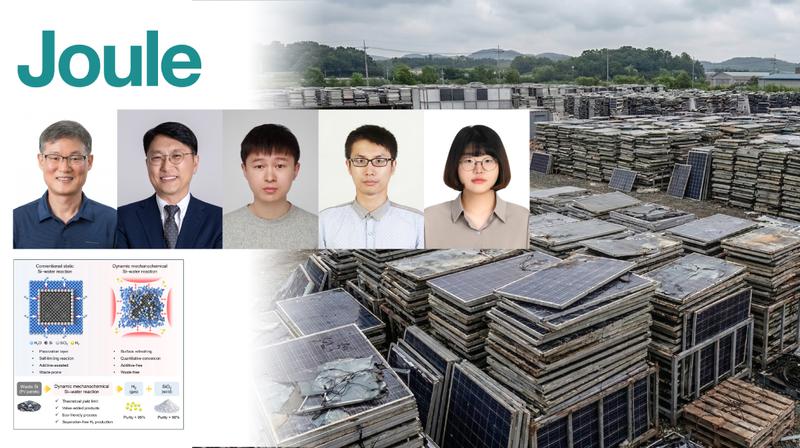
수명을 다한 1세대 태양광 발전 폐패널이 쏟아지고 있는 가운데, 태양광 폐패널의 실리콘으로 고순도 수소와 고부가가치 화학소재를 동시에 생산할 수 있는 기술이 나왔다. 2차 환경 오염 우려 때문에 매립이 어렵고 고온 소각조차 쉽지 않은 태양광 폐패널을 경제적이면서도 친환경적으로 처리할 기술로 주목받고 있다. UNIST 에너지화학공학과 백종범 교수팀은 폐태양광 패널의 실리콘을 활용해 고순도 수소와 고부가가치 산업용 소재인 실리카를 동시에 생산하는 고효율 공법을 개발했다고 6일 밝혔다. 실리콘은 물과 반응해 수소와 실리카를 만들 수 있다. 하지만 실제로는 반응이 시작되자마자 실리콘 표면에 형성되는 실리카 피막이 물의 접근을 차단해 반응이 멈춰 버린다. 이 때문에 수소 생산량이 이론적 최대 생산량에 턱없이 부족했다. 연구팀은 강한 약제를 사용하지 않고도 이 실리카막을 제거할 수 있는 공법을 개발해 고순도의 수소를 기존보다 최대 5배 많이 생산해 냈다. 실리콘과 물을 작은 구슬이 들어 있는 용기에 넣고 굴리면, 구슬과 실리콘 입자가 서로 부딪히면서 실리카 보호막을 반복해서 부수고 벗겨내는 원리다. 실험 결과 상용 실리콘 1g당 약 1706mL의 수소가 생산됐다. 이는 이론적 최대 생산량(1713mL g⁻¹)의 99.6%에 해당하는 수준이다. 일반적인 열화학 방식이 이론 최대치의 약 18~28% 수준에 머무는 것과 비교하면 최대 5배 높은 수소 생산 효율이다. 또 폐태양광 패널에서 직접 얻은 실리콘 가루를 이용한 실험에서도 이론적 최대치의 약 98% 수준에 이르는 수소 생산 성능을 기록했다. 함께 생산된 실리카도 촉매 지지체로서 우수한 성능을 보였다. 지지체는 촉매의 활성 금속 입자를 고르게 분산시켜 주고 고정해 주는 역할의 물질이다. 생산된 실 리카를 사용한 니켈 촉매는 이산화탄소를 메탄으로 바꾸는 화학 반응에서 상용 실리카를 사용한 촉매보다 더 높은 이산화탄소 전환율과 메탄 선택도를 기록했다. 실리카 표면에 많은 수산기(-OH)가 촉매 입자를 더 잘 분산시키기 때문인 것으로 분석됐다. 경제성 측면에서 부산물인 실리카로 얻는 수익을 아예 제외하고 계산하더라도, 이 공정의 수소 생산 단가는 기존 열화학 방식보다 수십에서 수천 배나 저렴한 것으로 나타났다. 실리카 판매 이익까지 더하면 수소를 생산할수록 오히려 수익이 나는 ‘마이너스 비용 구조’도 가능하다는 분석이다. 또 한 번씩 끊어서 작업하는 배치 방식보다 끊임없이 기계를 돌리는 연속식 공정에서 생산량과 에너지 효율이 훨씬 뛰어나, 향후 대규모 산업 현장에 바로 투입하기에도 수월하다. 백종범 교수는 “태양광 폐패널에서 나오는 실리콘을 활용해 친환경적으로 수소를 생산하면서 산업적으로 활용 가능한 실리카까지 얻을 수 있다는 점이 기술의 장점”이라며 “처치 곤란인 폐태양광 패널을 고부가가치 자원으로 탈바꿈시켜 자원 순환 경제를 구축하는 데 큰 도움이 될 것"이라고 말했다. 연구 결과는 에너지 분야 최고 권위 학술지인 줄(Joule)에 3월 27일 자로 온라인 공개됐으며, 공법의 핵심인 기계화학 공정은 줄의 퓨처 에너지(Future Energy) 부문에 3일 소개됐다. 퓨처 에너지는 지속 가능한 미래를 위한 유망 에너지 기술과 기술의 산업적 적용 가능성을 다루는 기획 코너다. 백 교수팀은 줄의 초청을 받아 관련 기술을 소개했다. 연구 수행은 과학기술정보통신부 한국연구재단 등의 지원으로 이뤄졌다.

2026년 02월 24일 화요일

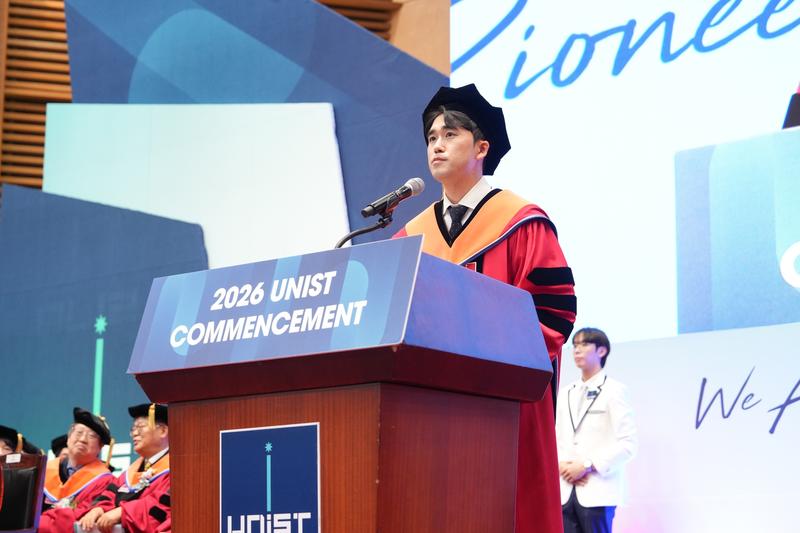
[2026 학위수여식] 대학원 졸업생 김종범 “천천히, 멀리… 속력보다 방향” 강조

"학술정보관과 연구실 불을 밝히며 밤공기를 마셨던 동료 여러분, 진심으로 고생 많으셨습니다" 2026 UNIST 학위수여식 대학원 졸업생 대표로 연단에 선 김종범 박사는 먼저 '같이 버텨낸 시간'부터 꺼냈다. "오늘만큼은 미래 걱정을 잠시 내려두고 사랑하는 사람들과 편안한 밤을 보내길 바란다"는 인사도 덧붙였다. 김 박사는 UNIST에서 보낸 12년을 마무리하며, 자신이 길고 치열한 학위 과정 끝에 얻은 삶의 나침반으로 "천천히, 그리고 멀리"를 제시했다. 그는 학위 기간 내내 페로브스카이트 태양전지 효율을 높이는 연구에 매달리며 앞만 보고 달리는 '1차선 추월차로' 같은 삶을 살았다고 회상했다. 하지만 속도에 집착할수록 연구는 번번이 '거대한 벽'에 부딪혔다고 했다. 그 벽을 넘긴 계기는 의외로 연구실 밖에 있었다. 아내와 마주 앉은 저녁 식탁에서 들은 한마디가 고정관념을 깨는 열쇠가 됐다는 것이다. "고기도 센 불에만 익히면 겉만 타고 속은 안 익는다. 온도를 천천히 조절해야 깊은 맛이 난다"는 아내의 말이, 전공이라는 차선에서 잠시 내려와 일상의 목소리에 귀 기울이는 ‘유연함’의 가치를 일깨워줬다고 그는 말했다. 이어 남이 정해놓은 속도에 끌려가기보다, 스스로 보폭을 설계해 길을 만드는 태도가 결국 더 멀리 가게 한다는 것. 김 박사는 "정말 중요한 건 얼마나 빨리 도달하느냐가 아니라, 얼마나 깊이 고민하며 어디를 향해 가고 있는가"라고 했다. 옆 차선의 누군가가 앞서 나가면 조급해지기 마련이지만, 1차선은 빠른 대신 에너지를 급격히 소모하고, 자기 속도를 지키는 2차선이 오히려 더 먼 거리를 간다는 비유도 들었다. 이 '속력보다 방향'이라는 메시지는 그가 실제로 쌓아온 연구 성과와도 맞닿아 있다. 학위 과정 중 태양전지 효율 공인 인증이라는 큰 고비를 '거듭된 실패' 끝에 넘어섰다고 했고, 연구자로서의 전환점으로는 '네이처(Nature) 1저자 논문 게재'와 결혼을 꼽았다. 꿈의 저널에 1저자로 논문을 싣는 경험은 막연했던 적성과 가능성을 확신으로 바꿔주었고, 더 큰 목표를 구체화하는 계기가 됐다는 것이다. 이제 그는 UNIST를 떠나 다음 성장 가도에 오른다. 김종범 박사는 현재 미국 UCSD에서 박사후연구원으로 연구를 이어가고 있다. 급변하는 AI 시대를 '치열한 서바이벌'로 표현하면서도, "우리는 일상에서 답을 찾는 창의적 개척자이자 속력보다 방향의 소중함을 아는 UNISTar"라며 자신감을 잃지 말자고 동료·후배들을 독려했다. 마지막 인사는 '감사'였다. 그는 부모님과 지도교수 석상일 교수, 그리고 아내에게 고마움을 전했다. 이어 "하나, 둘, 셋" 구호에 맞춰 각자 사랑하는 사람을 떠올리며 "고마워!"를 외치자고 제안하며 다함께 마음을 모아 연설을 마무리했다.

2026년 01월 12일 월요일

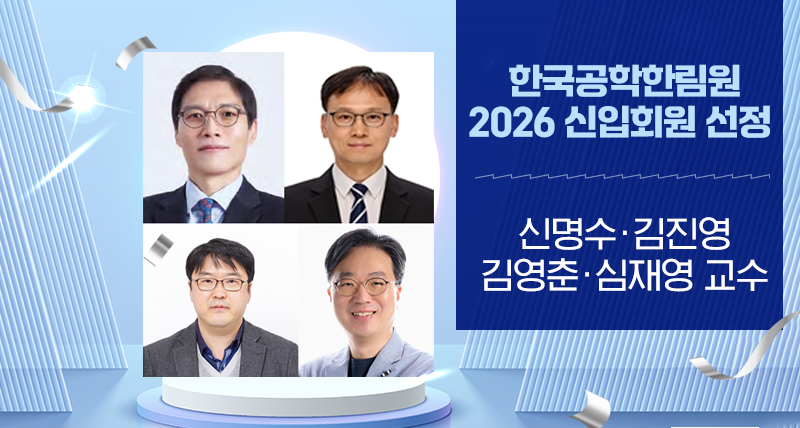
UNIST 교수 4명, 한국공학한림원 2026년 신입회원 선정

UNIST 교수 4명이 국내 공학기술 분야 최고 권위를 지닌 한국공학한림원 2026년도 신입 일반회원에 이름을 올렸다. UNIST는 이번 선정으로 건설환경공학, 화학생물공학, 기술경영정책, 컴퓨팅 등 공학 전반에서 연구 경쟁력을 다시 한번 입증했다. 한국공학한림원은 기업·대학·연구기관에서 연구 성과와 기술개발을 통해 국가 발전에 기여한 공학기술 전문가를 대상으로 회원을 선발한다. 후보 추천 이후 약 10개월에 걸친 다단계 심사를 통해 연구 성과와 기술의 학문적·산업적 파급력을 종합적으로 평가한다. 이번에 신입 일반회원으로 선정된 UNIST 교수는 △건설환경공학분과 신명수 교수(지구환경도시건설공학과) △화학생물공학분과 김진영 교수(에너지화학공학과) △기술경영정책분과 김영춘 교수(기술경영전문대학원) △컴퓨팅분과 심재영 교수(인공지능대학원) 등 4명이다. 이번 성과의 배경에는 연구자 개인의 우수성에 더해, 연구기획팀이 기관차원에서 신입회원 자격요건을 충족한 전임교원 200여 명을 대상으로 제도 취지와 절차를 안내하며 적극적인 독려도 한몫했다. 신명수 교수는 지속가능 건설기술과 내진공학 분야 연구자로, 인공지능(AI) 기반 내진 설계와 성능평가 기술을 발전시켜 왔다. 저탄소 고성능 건설재료 개발을 이끌었으며, 최근에는 3D 프린팅을 활용한 스마트건설 분야로 연구를 확장해 도시 기반시설의 지속가능성과 복원력 향상에 기여하고 있다. 김진영 교수는 차세대 태양전지와 광전자소자 분야 전문가다. 페로브스카이트 태양전지의 효율과 안정성을 동시에 높이는 연구를 통해 상용화 가능성을 끌어올렸다는 평가를 받는다. 국제 공동연구를 통해 재생에너지 확산과 탄소중립 실현에도 성과를 쌓아왔다. 김영춘 교수는 조직이론과 기술혁신전략 분야에서 기성기업과 신생기업의 혁신 전략, 조직학습과 기업 혁신 성과 관계를 실증적으로 분석해 왔다. 연구 결과는 조직과학(Organization Science), 연구정책(Research Policy) 등 국제 학술지에 게재됐다. 심재영 교수는 시각지능(컴퓨터비전) 분야 연구자이자 UNIST 인공지능대학원장이다. 영상과 대규모 3D 데이터 복원 기술을 개발해 자율주행차·로봇·드론·디지털트윈 관련 산업 분야 연구를 수행해 왔으며, 인공지능 기반 산업 현장 문제 해결 역량을 갖춘 인재 양성에도 힘을 쏟고 있다. 박종래 총장은 “UNIST에서 세계 수준의 연구 성과가 지속적으로 나올 수 있도록 지원을 강화하겠다”며 “우수한 연구 성과가 국내외 주요 학술·전문 기구에서 정당하게 평가받을 수 있도록 뒷받침하겠다”고 말했다.

2025년 12월 10일 수요일

UNIST 화학과, 에쓰-오일 과학문화재단 "차세대과학자상·우수학위논문상 수상"

화학과가 지난달 26일에 열린 2025년 에쓰-오일 과학문화재단 시상식에서 차세대과학자상과 우수학위논문상을 동시에 거머쥐었다. UNIST 기초과학 연구와 수소에너지 분야에서 쌓은 축적된 성과가 이번 수상으로 인정받은 것이다. <초고밀도 물리흡착·양자 기반 동위원소 분리 메커니즘 제시한 오현철 교수> 오 교수는 ‘제7회 에쓰-오일 차세대과학자상’ 화학 부문 수상자로 이름을 올렸다. 이 상은 한국과학기술한림원이 에쓰-오일과학문화재단의 후원을 받아 젊은 과학자를 발굴하는 권위 있는 상으로, 만 45세 이하 국내 연구자 가운데 최근 10년 연구 성과를 종합 평가해 선정한다. 기초과학·공학 6개 분야에서 한 명씩만 뽑히는 만큼 경쟁도 치열하다. 그는 나노다공성 고체 내부에 수소 분자를 극도로 높은 밀도로 채우는 물리흡착 기반 기술을 개발해 왔다. 특히 지난해 ‘네이처 케미스트리(Nature Chemistry)’에 발표한 연구에서는 소공(hydridic small-pore) 구조가 액체 수소의 약 두 배에 이르는 초고밀도 저장을 구현할 수 있음을 실험적으로 검증해 국제적 주목을 받았다. 이 성과는 장기적으로 수소 운반체 설계와 저장 효율 개선, 인프라 비용 절감까지 연결될 수 있는 ‘기초이면서도 실용적인’ 발견으로 평가된다. 동위원소 분리 연구에서는 새로운 양자 선택성 메커니즘을 실험적으로 확립했다. 그는 극저온 환경에서 중수소만 선택적으로 붙잡는 제3의 흡착지점을 세계 최초로 제시하며, 기존 이해를 뒤집는 새로운 물리적 흡착 매커니즘을 제안했다. 더 나아가, 구조가 유연한 MOF에서 무거운 동위원소가 더 빠르게 확산되는 반전(diffusion inversion) 현상을 실험으로 입증했다. 이는 고비용·고에너지 공정인 극저온 증류를 대체할 가능성을 보여준다는 점에서 산업적 파급력이 크다. 오현철 교수(가운데)가 ‘제7회 에쓰-오일 차세대과학자상’을 받고 기념촬영을 하고 있다. 그는 국제 활동도 활발하다. ‘IEA Hydrogen Technology Collaboration Programme(H₂TCP)’에서 한국 대표이자 집행위원으로 활동하며 수소기술 관련 국제 협력을 총괄했다. 한국수소및신에너지학회 이사, 대한화학회 무기화학분과 운영위원, Heliyon 부편집장 등으로 활약하며 학문과 산업을 잇는 가교 역할도 맡아 왔다. 오 교수는 “이번 수상은 연구실 학생들을 비롯해 공동연구를 한 동료 교수님들 덕분”이라며 “수소 연구가 탄소중립과 안전한 에너지 전환에 실제 기여하도록 더 치밀하게 탐구하겠다”고 말했다. <‘지능형 고체’ 개념 확장한 남주한 박사, Angewandte Chemie 3편 연속 게재> 화학과 남주한 박사는 ‘제15회 에쓰-오일 우수학위논문상(박사부문)’을 수상했다. 상장과 함께 천만 원의 상금도 받았다. 우수학위논문상은 기초과학·공학 분야에서 박사논문이 지닌 독창성·완성도·파급력을 평가해 매년 수여된다. 남 박사는 Zeolitic Imidazolate Framework(ZIF) 내부에서 일어나는 분자의 회전·접힘 등 미세한 운동(molecular motions)을 정교하게 분석해 ‘지능형 고체(smart solid)’라는 새로운 해석 틀을 제안했다. 고체가 단순히 정적인 구조물이 아니라, 미세한 내부 운동을 통해 기능을 스스로 조정하는 동적 시스템이라는 관점을 제시한 것이다. 그는 이 개념을 수소 동위원소 분리 실험으로 확장해 구조–기능 간의 정량적 연결고리를 제시했다. 연구의 일관성과 정밀성은 국제적으로도 인정받아, 2024년부터 ‘앙게반테 케미(Angewandte Chemie)’에 제1저자 논문 3편을 연속 게재하는 성과로 이어졌다. 올해 노벨화학상이 금속–유기 골격체(MOF) 분야 연구에 돌아가며, 설계 가능한 다공성 고체의 가치가 다시 세계적 조명을 받는 시점이라는 점도 연구 의미를 더욱 키웠다. 국내외 연구자들은 “ZIF의 동적 거동을 정량적으로 읽어낸 사례 가운데 가장 체계적인 연구 중 하나”라는 평가를 내놓고 있다. 남 박사는 “오랜 시간 쌓아온 실험과 고민이 의미 있게 평가되어 감사하다”며 “구조의 언어로 기능을 이해하고, 기능의 언어로 새로운 물질을 설계하는 연구를 이어가겠다”고 전했다. 그는 최근 대한화학회 우수박사학위논문상(2025), 한국방사광이용자협회 신진학술상(2025) 등 주요 학술상을 잇따라 받으며 잠재력과 영향력을 보이고 있다. 현재 한국연구재단(NRF) Post-Doc 성장형 공동연구 지원사업, 미래수소원천기술개발사업, 그리고 UNIST 글로벌 포닥 단기활동 지원을 받아 독일 TU Dresden에서 국제공동연구를 수행하며 연구 영역을 넓히고 있다.

2025년 12월 05일 금요일

프라이팬 코팅제 발랐더니 수소 생산 성능 확 좋아졌다!

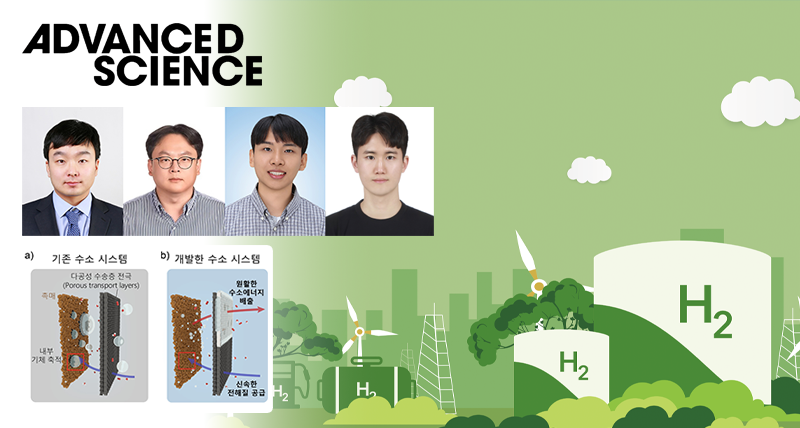
프라이팬 코팅제를 그린 수소 생산 장치의 부품에 발라 생산 성능을 1.4배 높인 기술이 나왔다. 코팅제가 수소 기포 부착을 막아 생산된 수소가 원활하게 배출되는 원리다. UNIST 에너지화학과 이동욱·류정기 교수팀은 수전해 장치의 주요 부품인 '다공성 수송층(PTL)'에 테플론(PTFE)을 코팅해 수소 생산 성능을 40% 높였다고 24일 밝혔다. 수전해 장치는 물과 전기로 그린 수소를 생산하는 장치이다. 수소는 이 장치 전극의 촉매 표면에서 화학 반응해 만들어진다. 이때 수소 기체가 제때 빠져나가지 못하고 기포 형태로 촉매 표면을 덮어버리면 반응이 막혀 문제가 된다. 생산 반응이 일어나는 촉매 표면적이 줄어들기 때문이다. [연구그림] 기존 수소 생산 시스템의 전극(좌)과 코팅층이 적용된 전극의 구조(우) 연구팀은 수소 기체가 빠져나가는 통로인 전극 ‘다공성 수송층’에 테플론을 발라 문제를 해결했다. 테플론은 원래 프라이팬의 음식 눌어붙음을 방지하기 위해 코팅하는 물질이다. 이 물질을 수송층에 코팅하면 수소가 다공성 구조를 빠르게 통과해 배출되면서 기포가 촉매 표면에 달라붙지 않게 된다. 또 원료 공급을 막지 않기 위해서 수송층의 아래쪽 절반은 코팅하지 않는 전략을 썼다. 수송층은 생산물인 수소가 빠져나가는 통로인 동시에 원료인 물을 촉매로 공급하는 역할을 하는데, 이 코팅제의 경우 물을 밀어내는 성질이 있기 때문이다. 수송층의 위쪽 절반만 코팅하면 가벼운 기체인 수소는 코팅이 된 위쪽으로 흘러나가고 원료는 여전히 아래쪽으로 잘 공급될 수 있다. 실제 이 코팅 다공성 수송층을 적용한 수전해 셀의 경우, 코팅 없는 셀에 비해 전류 밀도가 40% 증가했다. 전류 밀도는 단위 시간 당 생산량과 비례하는 지표다. 또 수소 기체가 통로를 막아 발생하는 전압 상승도 완화됐다. 코팅 과정도 간편해 상용화도 유리하다. 별도의 나노 가공이나 복잡한 공정 없이 액체 상태 코팅제를 분사해 열처리만 하면 된다. 연구팀은 225㎠ 넓이의 대면적 수송층도 실제로 제작했다. 류정기 교수는 “수전해에서는 다공성 수송층의 친수성이 강할수록 원료인 물 공급이 잘 돼 효율이 높다고 알려져 왔지만, 소수성 물질인 코팅제를 잘 활용하면 오히려 수소 생산이 잘 이뤄질 수 있다는 점을 확인했다”고 말했다. 이동욱 교수는 “테플론은 이미 대중화된 물질이라 다루기가 쉽고, 기존 수전해 장치 구조를 그대로 둔 채 표면에 코팅만 더해주면 되는 방식이라 적용이 간편하다”라며 “이번 기술은 수전해 장치 외에도 기체가 화학 반응에 관여하는 연료전지나 금속-공기전지 같은 전기화학 장치에서도 응용할 수 있을 것”이라고 말했다. 이번 연구는 UNIST 에너지화학공학과 강윤석·이승현 연구원이 주도했다. 연구 결과는 전기화학 분야의 국제 권위지 어드밴스드 사이언스(Advanced Science)에 11월 8일자로 온라인 공개됐으며, 표지논문으로도 선정돼 정식 출판을 앞두고 있다.

2025년 11월 18일 화요일

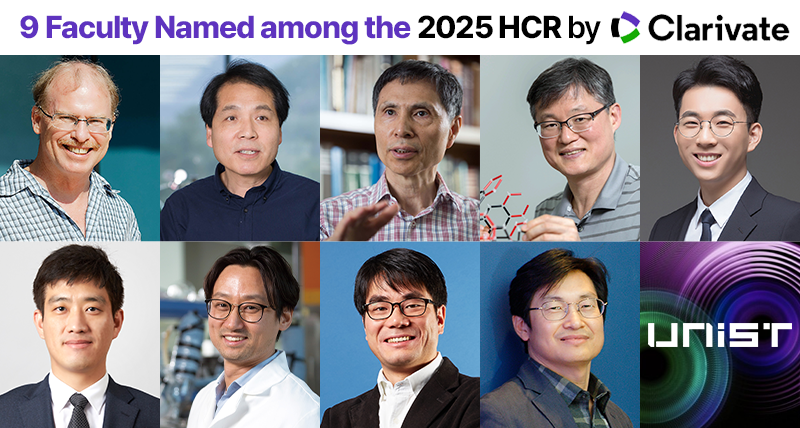
UNIST 교원 9명, ‘세계 상위 1% 연구자’ 선정

UNIST 교원 9명이 ‘2025 세계에서 가장 영향력 있는 1% 연구자(HCR)’ 명단에 이름을 올렸다. 세계 상위 1% 수준으로 평가받는 연구자로, 서울대에 이어 국내 두 번째 규모다. 지난해보다 2명 증가했다. 클래리베이트(Clarivate)는 현지 시각으로 지난 12일, ‘2025 세계에서 가장 영향력 있는 연구자(Highly Cited Researcher, HCR)’ 6,868명 명단을 공개했다. 2014년부터 2024년까지 ‘Web of Science Core Collection’에 등재된 SCI 논문 피인용 수를 기준으로 평가했다. 22개 분야별 영향력과 인용 성과를 종합했다. 올해 국내 HCR 연구자는 총 76명이다. UNIST는 9명을 배출하며 국내 대학 규모 2위로 순위가 상승했다. 젊은 연구자가 다수 포진한 지역 대학이라는 점에서 주목받았다. UNIST 선정자는 △로드니 루오프(Ruoff, Rodney S.) 특훈교수 △석상일 초빙특훈교수 △김광수 연구교수 △백종범 특훈교수 △이현욱 교수 △조승우 교수 △양창덕 교수 △정후영 교수 △신태주 교수 등 총 9명이다. 전년도 7명 중 7명이 포함됐고, 올해 백종범 교수 재진입, 신태주 교수 신규 선정이 뒤를 이었다. HCR 명단에 최장기간 이름을 올린 연구자는 로드니 루오프 특훈교수다. 2014년 첫 발표 이후 12년 연속 포함된 것이다. 재료과학·화학·물리학 경계를 넘나든 연구로 국제적 명성을 굳혔다. 올해는 크로스필드 부문에 새겨졌다. 석상일 초빙특훈교수와 김광수 연구교수도 8년 연속 선정 기록을 이어갔다. 석 교수가 페로브스카이트 태양전지 분야 세계적 석학이라면, 김 교수는 기계학습·양자이론 기반 신소재 설계 분야 석학이다. 지속적 성과를 증명하며 경쟁력을 보여줬다. 백종범 특훈교수는 그래핀과 2차원 소재 분야 글로벌 권위자다. 2018년 이후 6년 연속 HCR 반열에 올라 총 7회를 기록, 작년 한 해 제외 후 다시 진입했다. 이현욱 교수는 이차전지 실시간 투과전자현미경(TEM) 분석 전문가다. 크로스필드에서 6년 연속 선정 후, 올해 재료과학 분야에 합류하며 7년 연속 타이틀을 유지했다. 조승우·양창덕·정후영 교수도 크로스필드에서 각각 5년과 4년 연속 자리를 지켰다. 조승우 교수는 유전자 가위 기술 기반 생명공학 성과로 평가받고 있고, 양창덕 교수는 차세대 태양전지 개발에 집중하고 있다. 정후영 교수는 투과전자현미경(TEM) 분석 기술 고도화에 몰입해 연구 성과를 냈다. 올해 최초 선정된 신태주 교수는 방사광 가속기 기반 첨단 구조 분석 기술 전문가다. 방사광 분석기법을 활용해 다양한 신소재 구조를 규명했다. 박종래 총장은 “초격차 기술은 도전적 연구를 추진해 온 연구자들과, 그들의 연구 몰입을 뒷받침한 연구중심대학에서 비롯됐다”며 “UNIST는 이러한 개척자 정신을 바탕으로 연구자가 지속적인 성과를 창출할 수 있는 환경을 견고하게 구축해 나가겠다”고 말했다. 국내 대학 중 HCR 선정 결과는 서울대 16명, UNIST 9명, 성균관대 7명, 한양대 6명 순이다. 국가별 규모는 미국 2,670명, 중국 1,406명, 영국 570명, 독일 363명, 호주 312명이다. 기관별로는 중국 과학원 258명, 하버드대 170명, 스탠퍼드대 141명, 칭화대 91명 순으로 조사됐다. 2025 HCR 전체 명단과 분석·평가, 선정 방식은 클래리베이트 공식 웹사이트(https://clarivate.com/highly-cited-researchers)에서 확인할 수 있다.

2025년 11월 06일 목요일

김봉수 교수, ‘2025 화학산업의 날 유공자’ 산업부 장관표창

화학과 김봉수 교수가 지난달 31일, 서울 플라자호텔에서 열린 ‘2025년도 제17회 화학산업의 날 유공자 포상식’에서 산업통상자원부 장관 표창을 받았다. 탁월한 연구성과로 국가 화학산업 기술경쟁력 제고에 기여한 공로가 높이 평가됐다. ‘화학산업의 날 유공자 포상’은 대한민국 화학산업의 지속 성장·발전에 공헌한 인물의 노고를 기리기 위한 상이다. 행사는 한국화학산업협회가 주관하며, 기술 혁신 의욕을 북돋우기 위한 취지로 매년 개최된다. 김 교수는 융합적 교육과 연구를 통해 다양한 응용 분야에 적합한 신개념 화학소재를 개발해 왔다. 그의 연구는 산업계로 확산, 상용화 연구로 이어지며 실질적 기술 파급효과를 인정받아 이번 수상의 영예를 안았다. 2010년 미국 유학을 마치고 귀국한 그는 미래 전자소자 실용화를 목표로 유기화학소재 연구에 전념해왔다. 지금까지 논문 169편, 특허 56건의 성과를 냈다. 특히 양자점 디스플레이(Quantum Dot Display) 소자의 효율과 안정성을 동시에 높이는 비파괴적 가교제(nondestructive crosslinker)를 세계 최초로 개발했다. 이 기술은 ㈜삼성전자에 기술이전되며 산업적 가치를 입증했다. '제17회 화학산업의 날' 기념 산업통상자원부 장관표창을 받은 김봉수 교수(사진 왼쪽). 또 그는 유기열전소자, 전기화학 트랜지스터, 유기 포토다이오드, 유기 태양전지, 페로브스카이트 태양전지 등 다양한 분야에서도 세계 최고 수준의 소자 성능을 구현하고 있다. 신규 공액 고분자와 단분자 소재를 설계해 응용 가능성을 넓혔고, 상용화를 위한 대면적화·양산화 공정 연구도 병행 중이다. 소자 성능 향상 메커니즘 분석에도 힘을 쏟고 있다. 교육자로서의 활약도 두드러진다. 김 교수는 대학원생과 학부생을 대상으로 응용 목표에 맞는 맞춤형 화학소재 설계 교육을 이끌며 차세대 연구 인재 양성에 헌신하고 있다. 그는 대한화학회, 한국고분자학회, 태양광발전학회, 재료연구협회(Materials Research Society), 미국화학회(American Chemical Society) 등 국내외 주요 학회에서 활발히 활동 중이다. 여러 차례 우수 연구자상을 수상했고, 세계적인 연구진과의 공동 연구를 통해 후속 연구를 확장하며 UNIST 연구 역량과 위상을 국제적으로 알리고 있다. 김 교수는 “UNIST의 우수한 연구 환경과 협력적인 분위기 덕분에 많은 성과를 이룰 수 있었다”며 “앞으로도 신소재 개발 연구에 매진해 국민의 삶의 질 향상과 국가 산업 발전에 기여하겠다”고 수상 소감을 전했다.

2025년 11월 04일 화요일

화학과 조재흥 교수, 대한화학회 'Sigma-Aldrich 화학자상' 수상

화학과 조재흥 교수가 대한화학회로부터 ‘Sigma-Aldrich 화학자상’을 수상했다. 시상식은 지난달 23일, 창원에서 열린 대한화학회 정기학술대회에서 진행됐다. ‘Sigma-Aldrich 화학자상’은 대한화학회가 국내 화학 연구 발전에 탁월한 공헌을 한 연구자에게 수여하는 권위 있는 상으로, 학문적 창의성과 연구 성과의 우수성을 종합적으로 평가해 선정한다. 조재흥 교수는 기초 화학 연구를 기반으로 생체모방 친환경 촉매의 설계와 반응 메커니즘 규명, 그리고 일산화질소 전달을 통한 혈관 확장 치료제 개발 등에서 학문적·의학적으로 의미 있는 성과를 거둔 점이 높이 평가됐다. 최근에는 일산화질소의 시공간적 조절을 통한 전달 연구 분야에서 국내외적으로 주목받는 연구를 꾸준히 이어오고 있다. 조 교수는 “이번 수상은 저와 연구팀이 꾸준히 추구해온 화학의 근본 원리에 대한 탐구와 그 응용 가능성을 인정받은 결과”라며 “앞으로도 화학의 새로운 가능성을 열어가는 연구를 지속해 나가겠다”고 소감을 전했다. 아울러, 2025 대한화학회에서는 조재흥 교수의 Sigma-Aldrich 화학자상 수상뿐만 아니라, 화학과 김도현, 남주한, 김민혁 박사가 ‘우수박사학위논문상’을 수상하는 쾌거를 이뤘다. 이는 UNIST 화학과가 기초와 응용화학 연구에서 두드러진 경쟁력을 다시 한번 입증한 결과로 평가된다.

연구성과

Research

2026년 03월 27일 금요일

Advanced Interface Engineering for High-Performance Solar Cells and Green Hydrogen

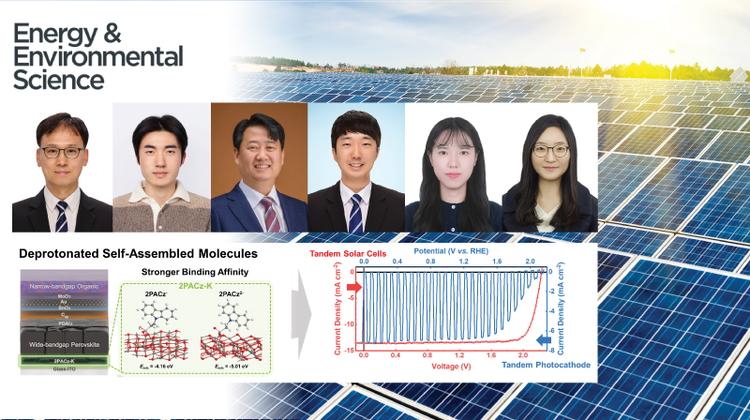
Abstract Self-assembled monolayer (SAM)-based hole-selective layers (HSLs) offer a promising route to defect-passivated and energy-aligned interfaces in perovskite organic tandem solar cells (POTSCs). However, their practical implementation remains hindered by weak anchoring to transparent conductive oxides (TCOs), leading to desorption during perovskite deposition and poor interfacial durability under polar solvent exposure. Here, we present a chemical interfacial stabilization strategy in which potassium carbonate (K2CO3) mediates the controlled deprotonation of [2-(9H-carbazol-9-yl)ethyl]phosphonic acid (2PACz), forming mixed mono- and di-deprotonated species (2PACz-K) that bind strongly to indium tin oxide (ITO). The resulting SAM exhibits superior solvent resistance, improved energy-level alignment, and enhanced buried interface quality. POTSCs incorporating 2PACz-K achieve 25.10% power conversion efficiency (PCE) with a high open-circuit voltage (VOC) of 2.230 V, while retaining 80% of their initial PCE after 220 h of maximum power point (MPP) tracking under simulated 1-sun illumination. Beyond photovoltaics, the robust 2PACz-K interface is further integrated into a perovskite/organic tandem photocathode (POT-PEC), representing the first transparent, metal-free tandem PEC architecture capable of stable operation in aqueous electrolyte, delivering a photovoltage (Vph) of 2.16 V and achieving a solar-to-hydrogen (STH) conversion efficiency of 7.7%. This work establishes a versatile interfacial design paradigm that bridges photovoltaic and photoelectrochemical energy conversion. Researchers at UNIST have unveiled a novel interface engineering technique that significantly improves both the performance and durability of perovskite/organic tandem solar cells (POTSCs). Published in the February 2026 issue of Energy & Environmental Science, their study demonstrates how precise control of self-assembled monolayers (SAMs) at the molecular level can lead to more stable, high-efficiency solar devices and open new pathways for solar-driven hydrogen production. POTSCs are among the most promising photovoltaic technologies, combining different light-absorbing materials to maximize energy conversion. However, instability at the interface between the transparent electrode and the perovskite layer has long hampered their long-term reliability, especially under operational conditions. Led by Professors Jin-Young Kim and Dong-Seok Kim from the Graduate School of Carbon Neutrality, along with Professor Seung-Jae Shin from the School of Energy and Chemical Engineering, the team developed a method to chemically stabilize this critical interface. They focused on a self-assembled monolayer (SAM) known as 2PACz, which facilitates hole extraction in solar cells. Figure 1. Schematic illustration of the device structure of POTSCs with 2PACz-K and their performance. By introducing potassium carbonate (K₂CO₃), the team induced a controlled deprotonation of 2PACz molecules—partially removing hydrogen ions from their phosphonic acid groups. This process creates a mixture of mono- and di-deprotonated species (referred to as 2PACz-K), which acquire a negative charge and form stronger, more stable bonds with indium tin oxide (ITO) electrodes. This enhanced bonding results in an interface that is more resistant to solvents used during device fabrication, maintaining uniformity and stability. Devices fabricated with this chemically tailored interface demonstrated remarkable performance: perovskite solar cells achieved a power conversion efficiency (PCE) of 25.1% and an open-circuit voltage (VOC) of 2.23 V. Moreover, these cells retained over 80% of their initial efficiency after 220 hours of continuous operation under simulated sunlight, indicating substantial improvements in operational stability. The team also applied this interface engineering approach to photoelectrochemical (PEC) cells designed for water splitting. The resulting tandem PEC device exhibited a high photovoltage of 2.16 V and achieved a solar-to-hydrogen (STH) conversion efficiency of 7.7% without the need for external bias—marking a significant step toward practical, solar-driven hydrogen generation. Professor Jin-Young Kim stated, "Controlling the chemical state of interfaces at the molecular level allows us to dramatically improve both the efficiency and long-term stability of solar energy devices. This strategy offers a promising avenue for developing integrated systems that convert sunlight directly into electricity and hydrogen, supporting a sustainable energy future." The study has been supported by the National Research Foundation of Korea (NRF) and the Ministry of Science and ICT (MSIT). Journal Reference Jung Geon Son, Ha-eun Koo, Woojin Lee, et al., "Deprotonated self-assembled molecules as robust hole-selective layers for perovskite/organic tandem solar cells and photocathodes," Energy Environ. Sci., (2026).

2026년 03월 13일 금요일

UNIST Unveils New Organic Semiconductor Photoelectrode for Solar Hydrogen Production

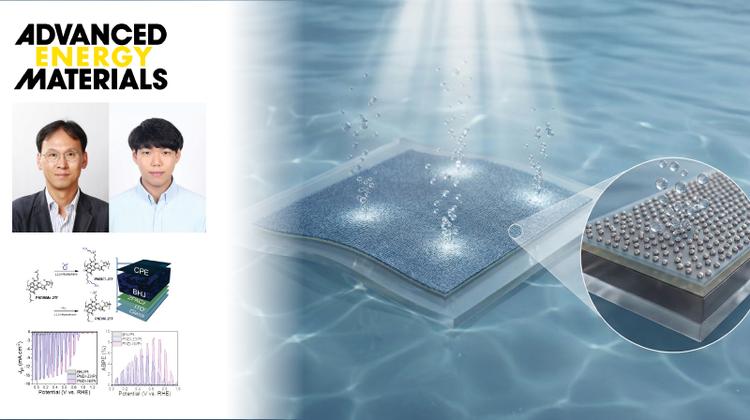
Abstract Effective hydrogen generation in organic photoelectrochemical cells (OPECs) requires precise interfacial engineering to achieve uniform metal catalyst deposition, with enhanced water wetting and efficient charge transfer on the hydrophobic organic photoelectrode surface. Herein, we introduce n-type conjugated polyelectrolytes (CPEs) as electron transport layers to address these challenges. Two CPEs based on a naphthalene diimide backbone with distinct ionic substituents were investigated: a zwitterionic sulfobetaine (PNDI-Z3) and a quaternary ammonium iodide (PNDI-NI). Both CPEs significantly enhance surface wettability and promote uniform Pt nanoparticle deposition compared to photocathodes without CPEs. Notably, PNDI-NI enables iodide–chloride exchange with platinate precursors, accelerating the photoreduction of PtIV to PtII and ensuring strong immobilization of Pt species. Further reduction to metallic Pt0 occurs during PEC operation under applied reduction potential. Density functional theory (DFT) calculations confirm the pivotal role of iodide in facilitating this reduction pathway. The resulting PNDI-NI-modified photocathode achieves a photocurrent density of 17.7 mA cm−2 and an applied bias photon-to-current efficiency of 8.88%, representing the highest performance among reported organic photocathodes, alongside superior operational stability confirmed by chronoamperometry. These findings highlight ionically engineered CPEs as a promising strategy for coupling efficient Pt deposition and reduction with enhanced photoelectrochemical performance and durability of OPEC devices. A research team, affiliated with UNIST has unveiled the development of a long-lasting, high-efficiency organic semiconductor photoelectrode capable of solar-driven hydrogen production at a world-class level. This breakthrough marks a significant advancement toward practical, sustainable hydrogen generation using organic materials. Led by Professor Jin Young Kim of the UNIST Graduate School of Carbon Neutrality and Professor Han Young Woo of Korea University, the team engineered a novel material that enables uniform and strong attachment of platinum catalysts onto organic photoelectrodes. This innovation allows organic systems to achieve hydrogen production performance comparable to inorganic counterparts, while offering advantages in cost, flexibility, and weight. Solar hydrogen production involves illuminating a water-immersed photoelectrode, where sunlight excites the semiconductor’s active layer to generate electrons that drive water-splitting reactions, producing hydrogen gas. Platinum catalysts on the surface reduce the energy barrier for these reactions, making the process more efficient. Despite their potential benefits, organic semiconductor-based photoelectrodes have faced challenges in achieving uniform catalyst coverage and long-term stability. Their inherently hydrophobic surfaces often hinder even catalyst distribution and lead to catalyst detachment over time, limiting their commercial viability despite their low cost and flexibility. The research team developed a multifunctional polymer coating, called PNDI-NI, applied to the organic photoactive layer. Unlike conventional hydrophobic polymers, this polymer combines both hydrophobic and hydrophilic (water-attracting) properties, significantly improving surface wettability. A key feature is the presence of iodide ions within the polymer, which promote rapid growth and strong adhesion of platinum nanoparticles by facilitating the reduction of platinum ions directly onto the surface. This results in densely packed, evenly distributed platinum particles that are firmly anchored, enhancing both catalytic activity and long-term stability. Testing revealed that the coated organic photoelectrode achieved a photocurrent density of 17.69 mA/cm² under neutral conditions, with an applied bias photon-to-current efficiency (ABPE) of 8.88%. These figures represent the highest performance reported for organic-based photoelectrodes to date, approaching the efficiency of inorganic systems. This research, with first authorship by Jung Min Ha from UNIST, Shuran Xu from Korea University, and Jaehyeong Kim from UNIST, offers a scalable, solution-based platform suitable for large-area fabrication. The entire process—from polymer coating to catalyst formation—can be performed in liquid, facilitating industrial application. Moreover, the approach can be adapted to incorporate various catalytic materials beyond platinum, broadening its potential for diverse applications. Professor Kim states, "Our multifunctional polymer coating provides a simple yet effective solution for achieving uniform catalyst deposition and durable operation in organic photoelectrodes. This development offers a promising pathway toward practical solar hydrogen production." The findings of this research have been published in Advanced Energy Materials on January 6, 2026. This study has been supported by the National Research Foundation of Korea (NRF) and the Ministry of Science and ICT (MSIT). Journal Reference Jung Min Ha, Jaehyeong Kim, Shuran Xu, et al., "Conjugated Polyelectrolytes with Tunable Ionic Side Chains for Iodide-Mediated Pt Reduction in Photoelectrochemical H2 Generation," Adv. Energy Mater., (2026).

2025년 12월 01일 월요일

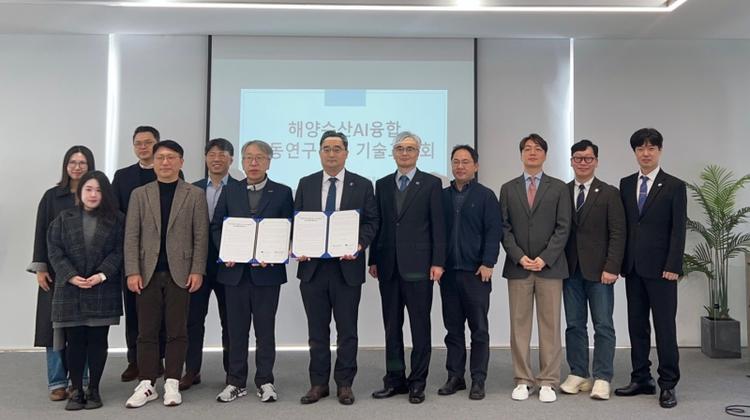
UNIST and PNU Launch Smart Ocean Alliance, Expanding Shared Research Infrastructure

On November 28, UNIST and Pukyong National University (PNU) have expanded their research partnership with a new agreement enabling shared access to research facilities and equipment. The agreement was signed during a joint technical exchange focused on AI applications in the marine and fisheries sector. This partnership also moves forward their ongoing efforts to establish the 'Marine & Fisheries AI Convergence Research Center,' a collaborative initiative under development since August 2025. During the exchange, researchers from both institutions reviewed ongoing projects, discussed priority areas for joint development, and explored opportunities for deeper integration of data, technology, and expertise. Presentations highlighted key fields—including Arctic maritime strategy, marine carbon-neutral technologies, and smart fisheries systems—reflecting the growing need for advanced AI solutions across emerging ocean industries. UNIST faculty offered perspectives on strategic technologies for the maritime sector. Professor Chang-Hun Lee (School of Business Administration) outlined port strategies in preparation for future Arctic Sea Route access, while Professor Hankwon Lim (Graduate School of Carbon Neutrality) presented pathways for industrial carbon reduction. From PNU, Professors Seong-Hoon Kim and Eun-Joon Chun proposed new research directions that link marine logistics with SMR and materials-processing technologies. As part of the collaboration, the two institutions signed an agreement to mutually open their research facilities, experimental equipment, and training spaces under the same conditions. The arrangement will provide UNIST researchers access to PNU’s maritime and training infrastructure, while PNU researchers will gain use of UNIST's advanced analytical and testing platforms—significantly expanding research capacity and efficiency for both sides. Building on this agreement, UNIST and PNU plan to broaden cooperation across key strategic fields, including ocean environmental monitoring, marine robotics, resource exploration, and hydrogen and carbon-neutral technologies. Joint initiatives will also extend to policy research, such as maritime industry finance and technology strategies for Arctic route development, helping strengthen the broader marine research ecosystem across the southeastern region. UNIST President Chong Rae Park emphasized the significance of the partnership, noting, "This collaboration marks an important step in expanding UNIST’s research network across the marine and AI landscape. By connecting our capabilities with a broader ocean science ecosystem, we aim to scale this partnership from the southeastern region of Korea to global marine and fisheries research." PNU President Sang-Hoon Bae added, "By combining the strengths of both institutions, we expect to accelerate innovation in the marine industry and deliver meaningful solutions to emerging challenges."

2025년 06월 11일 수요일

Mechanochemical Approach for Low-Temperature CO2 Capture and Conversion

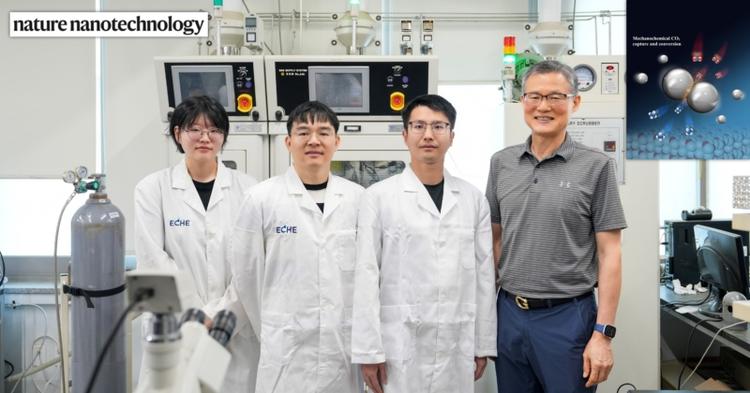
Abstract Developing a direct carbon dioxide (CO2) capture and methanation method is one of the most important challenges to achieving carbon neutrality. However, converting CO2 into methane (CH4) kinetically requires the activation of stable CO2 at high temperatures (300–500 °C), while the CO2-to-CH4 conversion thermodynamically favours low temperatures. Here we report an efficient mechanochemical CO2 capture and conversion under mild conditions (65 °C). Using commercial zirconium oxide (ZrO2) and nickel catalysts, the mechanochemical CO2 capture capacity was 75-fold higher than the conventional thermochemical process. The mechanochemical CO2 conversion reached a nearly quantitative CO2 conversion (99.2%) with CH4 selectivity (98.8%). We determined that repeatedly induced abundant oxygen vacancies on ZrO2 by dynamic mechanical actions are responsible for efficient CO2 capture and, thus, subsequently spontaneous methanation. A pioneering approach has been developed to convert carbon dioxide (CO₂) into methane (CH₄)—the main component of natural gas—at room temperature. Traditionally, this process requires high temperatures above 300°C, making it energy-intensive and costly. The new method, which involves just rotating raw materials with steel balls, was recently published in Nature Nanotechnology, a top journal in nanoscience. Led by Professor Jong-Beom Baek in the School of Energy and Chemical Engineering and Professor Hankwon Lim of the Graduate School of Carbon Neutrality at UNIST, the research team announced that they have successfully created a mechanochemical process, capable of converting CO₂ into CH₄ efficiently at just 65°C. This simpler, low-energy approach could accelerate the shift toward a sustainable, carbon-neutral future. The process uses a ball mill—a device containing small steel balls of a few millimeters in diameter—filled with catalysts and raw materials. As the mill rotates, collisions and friction activate the catalyst surfaces, enabling CO₂ to be captured and react with hydrogen to produce methane. Remarkably, the team achieved a 99.2% conversion rate of CO₂ at this low temperature, with 98.8% of the reacted CO₂ turning directly into methane, rather than byproducts. The process also proved highly effective in continuous operation, maintaining an 81.4% reaction participation rate and 98.8% methane selectivity even at 15°C, below room temperature. This demonstrates its potential for scalable industrial use. Figure 1. Schematic image, illustrating the mechanochemical CO2 capture and conversion. The process leverages commercially available zirconium oxide (ZrO₂) and nickel catalysts, which are both affordable and widely used in industry. Nickel helps split hydrogen molecules, while zirconium oxide enhances CO₂ activation. The mechanical impacts within the ball mill induce oxygen vacancies in zirconium oxide, trapping CO₂ molecules and enabling their reaction with hydrogen on the nickel catalyst to produce methane. Economic assessments suggest that because the process operates at low temperatures and utilizes readily available catalysts without extensive pre-treatment, it can significantly reduce equipment and operational costs. Professor Lim explained, "When powered by renewable energy sources, like wind or solar, this method could cut energy consumption in half compared to conventional thermochemical processes." Professor Baek highlighted the practical significance by saying "This technology makes it possible to convert CO₂ directly into fuel on-site, without the need for high-temperature, high-pressure equipment. It not only reduces carbon emissions but also lowers infrastructure and transportation costs, offering a promising pathway toward carbon neutrality." This research was conducted in collaboration with Professor Qunxiang Li of the University of Science and Technology of China (USTC), with support from the National Research Foundation (NRF) of Korea and the UNIST Carbon Neutrality Demonstration and Research Center. Journal Reference Runnan Guan, Li Sheng, Changqing Li, et al., "Mechanochemical carbon dioxide capture and conversion," Nat. Nanotechnol., (2025).

2025년 05월 19일 월요일

New Thin-Film Material Achieves Both High Efficiency and Durability in Tandem Solar Cells

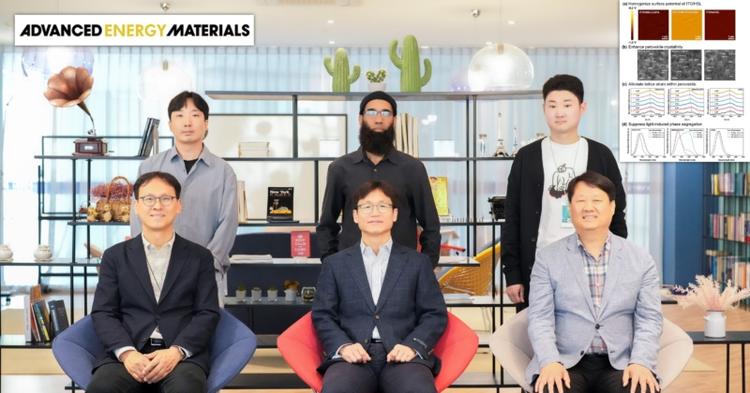
Abstract Perovskite/organic tandem solar cells (POTSCs) are promising candidates for surpassing the Shockley-Queisser limit through reduction of thermalization losses. However, wide bandgap perovskite solar cells (WBG PSCs), which function as top cells of POTSCs, still suffer from significant open-circuit voltage (VOC) losses, limiting efficiency improvement of POTSCs. Here, a multi-functional hole-selective layer (mHSL) is reported via blending two functionalized self-assembled monolayer (SAM) molecules: (4-(3,6-diiodo-9H-carbazol-9-yl)butyl)phosphonic acid (36ICzC4PA) and (4-(3,6-dimethoxy-9H-carbazol-9-yl)butyl)phosphonic acid (36MeOCzC4PA). The blending of the two molecules plays multiple roles: i) Suppressing micelle formation of SAM molecules, ii) optimizing energy level alignment with homogeneous and highly covered SAMs, iii) enhancing crystallinity and orientation of perovskite through interaction with SAM materials, and iv) suppressing both lattice strain and phase segregation. Implementing mHSL on WBG PSCs enables a power conversion efficiency (PCE) of 18.85% with a notable VOC of 1.366 V. When integrated into POTSCs, the PCE reached 24.73% (certified 24.19%) with record-high VOC and fill factor (FF) of 2.216 V and 84.07%, respectively. Furthermore, POTSCs exhibit excellent photo- and thermal stabilities, retaining ≈80% of their initial PCEs after maximum power point (MPP) tracking under 1-sun illumination in ambient conditions for 305 h or exposure to 65 °C in N2 conditions for 500 h. A novel thin-film material, capable of simultaneously enhancing the efficiency and durability of tandem solar cells has been developed. Led by Professor BongSoo Kim from the Department of Chemistry at UNIST, in collaboration with Professors Jin Young Kim and Dong Suk Kim from the Graduate School of Carbon Neutrality at UNIST, the team announced the development of a multi-functional hole-selective layer (mHSL) designed to significantly improve the performance of perovskite/organic tandem solar cells (POTSCs). Tandem solar cells are advanced photovoltaic devices that stack two different types of cells to absorb a broader spectrum of sunlight, thereby increasing overall energy conversion efficiency. Among these, combinations of perovskite and organic materials are particularly promising for producing thin, flexible solar panels suitable for wearable devices and building-integrated photovoltaics, positioning them as next-generation energy sources. The research team successfully developed a hole-transport layer (HTL) by blending two self-assembled molecules, achieving a record open-circuit voltage (VOC) of 2.216 V and a power conversion efficiency (PCE) of 24.73%. The VOC, which reflects the maximum voltage the cell can produce without current flow, is a critical indicator of device performance. This efficiency level is among the highest ever recorded for perovskite-organic tandem solar cells globally. Moreover, the device maintained over 80% of its initial efficiency after prolonged exposure to high temperatures of 65°C and continuous illumination, demonstrating excellent long-term stability. The newly developed HTL is carefully engineered to align its energy levels with the perovskite active layer, selectively extracting holes while blocking electrons, thereby reducing charge recombination losses. Efficient charge extraction is essential because, after light absorption, electrons and holes must reach their respective electrodes to generate current; misaligned energy levels cause charge loss and reduced efficiency. Additionally, this HTL reduces interface defects that hinder charge transport and stabilizes the crystal structure, thanks to the strong chemical bonds formed between the substituents of the self-assembled molecules—36ICzC4PA and 36MeOCzC4PA—and the metal ions within the perovskite layer. The self-assembly property of these molecules ensures a uniform, ultra-thin coating over large areas, simplifying manufacturing processes and facilitating scalable production for commercialization. Professor Kim commented, "By developing a self-assembled hole transport layer that improves charge extraction, interface stability, and structural durability, we have made a significant leap forward in enhancing the performance of tandem solar cells. This development brings us closer to realizing thin, flexible, and high-efficiency next-generation solar panels for practical applications." This research involved first authors Jung Geon Son and Shahid Ameen and was published in Advanced Energy Materials on April 8, 2025. The study was supported by the National Research Foundation of Korea (NRF) through the Ministry of Science and ICT (MSIT). Journal Reference Jung Geon Son, Shahid Ameen, Jina Roe, et al., "Exceeding 2.2 V Open-Circuit Voltage in Perovskite/Organic Tandem Solar Cells via Multi-Functional Hole-Selective Layer," Adv. Energy Mater., (2025).

2025년 04월 30일 수요일

Innovative All-Organic Photoelectrode Developed to Enhance Eco-Friendly Solar Hydrogen Production

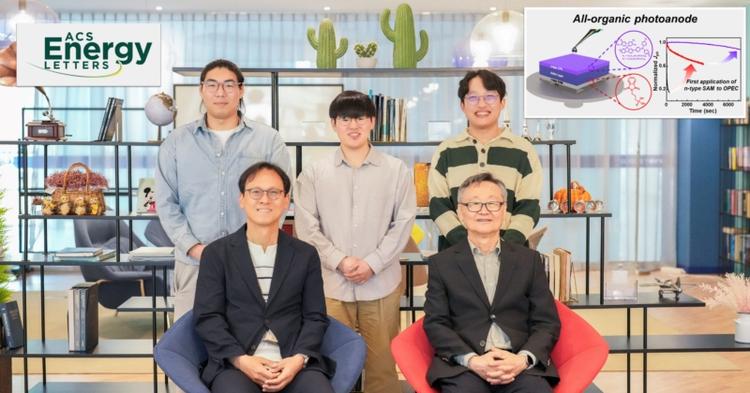
Abstract Organic photoelectrochemical (OPEC) cells are efficient at generating photocurrents but face significant challenges in long-term stability due to the incompatibility of metal oxide charge transport layers with organic photoactive materials and their pH sensitivity. To overcome these issues, we developed an all-organic photoanode incorporating n-type self-assembled monolayers (SAMs) with imide core modifications, which optimize the work function of the ITO substrate, improving charge transfer and the onset potential (Vonset). The addition of a hole-transporting p-type conjugated polyelectrolyte (TPAFS-7TMA) further enhances hole transport and water wettability. This photoanode, designed for ascorbic acid oxidation, achieved a Vonset of 0.25 VRHE and a photocurrent density (Jph) of 7.92 mA cm–2 at oxidation potential and retained 90% of its initial Jph over 2 h under 1 sun irradiation. This all-organic design effectively addresses the limitations of conventional OPEC cells, providing a stable and efficient alternative for durable OPEC systems. We developed a stable and efficient all-organic photoanode for OPEC cells, utilizing imide-modified n-type SAMs and a p-type conjugated polyelectrolyte to enhance charge transfer, water wettability, and durability, achieving significant performance improvements. A research team, affiliated with UNIST has unveiled a new technology, capable of making solar-powered hydrogen production more stable and cost-effective. This breakthrough involves constructing the entire photoelectrode, a key component in hydrogen generation, entirely from organic materials—overcoming longstanding issues of corrosion and delamination associated with conventional organic photoelectrodes. Led Professor Jin Young Kim from the Graduate School of Carbon Neutrality at UNIST, in collaboration with Professor Jae Sung Lee from the School of Energy and Chemical Engineering, and Professor Han Young Woo from the Department of Chemistry at Korea University, the team announced that they have developed an all-organic photoanode that eliminates the need for metal oxides. Solar hydrogen production operates on the principle that when sunlight irradiates a photoelectrode submerged in water, electrochemical reactions occur on its surface, splitting water molecules into hydrogen and oxygen. To maximize efficiency, these reactions typically occur in acidic or alkaline solutions. However, conventional organic photoelectrodes often rely on metal oxide charge transport layers, which are prone to corrosion or delamination in such environments, resulting in compromised stability. Figure 1. Schematic image, illustrating the structure and performance of the highly stable all-in-one photoelectrode. To address these challenges, the researchers developed a fully organic photoelectrode utilizing n-type self-assembled monolayers (SAMs) and p-type conjugated polymer electrolytes. The n-type SAM replaces metal oxides, enhancing adhesion between the substrate and the organic active layer while significantly improving electron transfer efficiency. The p-type polymer layer on the surface selectively transports holes and increases surface hydrophilicity, thereby improving contact with the aqueous solution. The newly developed all-organic photoelectrode demonstrated a high photocurrent density of 7.92 mA/cm² in an acidic environment containing ascorbic acid. This performance metric directly correlates with hydrogen production rate. Remarkably, the device maintained over 90% of its initial performance after two hours of continuous illumination without the need for protective coatings or metal encapsulation, confirming its exceptional stability. Professor Kim stated, "This research fundamentally resolves the pH sensitivity and delamination issues that have historically limited organic photoelectrodes," adding, "Applying n-type self-assembled monolayers to the photoanode for the first time and constructing a fully organic photoelectrode demonstrates the practical viability of entirely organic systems." He further noted, "This technology not only advances eco-friendly hydrogen production but also opens avenues for developing diverse organic-based photoelectrochemical devices." The study was conducted by Dr. Jiwoo Yeop and Dr. Jin Uk Lee from UNIST, along with Jae Hoon Son (Combined M.S. and Ph.D., Department of Chemistry) from Korea University, serving as the first authors. The research was published in the March 14 issue of ACS Energy Letters and was supported by the National Research Foundation of Korea (NRF) under the Ministry of Science and ICT. Journal Reference Jiwoo Yeop, Jae Hoon Son, Jin Uk Lee, et al., "Realization of All-Organic Photoanodes for Photoelectrochemical Cells," ACS Energy Lett., (2025).
2025년 01월 07일 화요일

Professor Seungho Park-Lee Recognized by Ulsan Mayor for Reducing 10,000 Disposable Cups with UlsanCup Initiative

Professor Seungho Park-Lee, affiliated with the Department of Design and the Graduate School of Carbon Neutrality at UNIST, has been awarded the Ulsan Mayor's Commendation Award for his exemplary work in launching and revitalizing the UlsanCup initiative. His efforts have led to a significant reduction of 11,590 disposable cups used over a span of approximately ten months within the Ulsan Metropolitan City Hall and UNIST campuses. A key highlight of Professor Lee's initiative was the development of the world's first life cycle assessment (LCA) website specifically designed for multiple-use drinking cups. This innovative platform, created in collaboration with a team, led by Professor Hankwon Lim from the Graduate School of Carbon Neutrality and the School of Energy and Chemical Engineering at UNIST, enables users to assess the environmental footprint of these cups, while also helping the general public to better understand and evaluate the disposable waste and predict carbon dioxide emissions. The UlsanCup was initially introduced near Ulsan Metropolitan City Hall in December 2022 and expanded to UNIST in April 2023. Notably, it boasts an impressive recovery rate exceeding 90% through a straightforward return system, making it both economical and practical, as it does not require expensive return equipment. To enhance user convenience, the research team has refined the QR scanner cover and improved the user interface of the return app. Additionally, they have identified practical and innovative service concepts, such as ' Group deposit ' and ' Collection Incentive ,' and are currently pursuing a patent for these ideas. The LCA website is publicly accessible on the official website of Ulsan Metropolitan City ( https://www.ulsan.go.kr/lca/ ), allowing users to evaluate environmental impact effortlessly. Users can input details such as material type, weight, recovery rate, and washing energy consumption to calculate carbon emissions and waste generation, establishing it as a user-friendly tool for measuring environmental effects. This website also plays a crucial role in shaping Ulsan Metropolitan City's multiple-use cup policy. Through data analysis, officials can assess the feasibility of adding new locations or increasing user participation. An official from Ulsan Metropolitan City stated, "The UlsanCup will be managed according to detailed plans aimed at scientifically reducing carbon emissions and waste." The research team has made their analysis algorithm open source on the mentioned website, providing an opportunity for other researchers to further develop and expand the algorithm. “There are environmental consulting firms that conduct comprehensive evaluations, yet it is rare for them to disclose their algorithms,” remarked Professor Hankwon Lim. “This transparency exemplifies UNIST’s commitment to the spirit of ‘First in Change,’ prioritizing the creation and sharing of knowledge.” Professor Lee emphasized, "The UlsanCup Project offers a scientific solution to the challenges of carbon emissions and waste management grounded in empirical data. UNIST is dedicated to propagating sustainable environmental technologies and resource circulation systems in the global market." This research initiative is part of the ' Project Utilizing Science and Technology for Local Community Problem-Solving ,' co-supported by the Ministry of Science and ICT (MSIT) and the Ministry of Interior and Safety (MOIS) in 2023. The project has garnered attention as the Living Lab Research Project , aimed at improving citizens' daily lives through science and technology, with funding provided by the MSIT in collaboration with local governments.

2024년 11월 15일 금요일

New Study Unveils the Optimal Concentration for Effective CO₂ Capture in Gas Hydrates

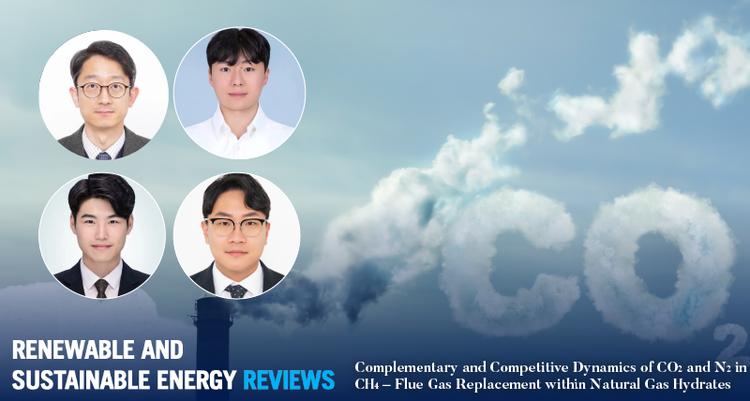
Abstract To mitigate global warming, the paramount imperative lies in curbing the emission of CO2. The guest replacement method is a prominent carbon-neutral technological advancement that involves injecting CO2 into natural gas hydrate layers to accomplish the dual objectives of energy production and carbon storage. In this study, the guest dynamics in the CH4 – flue gas replacement process were examined, and the impacts of the N2 concentration of the injected gas were systematically analyzed. A powder X-ray diffraction analysis of the cage-specific guest distributions after CH4 − CO2 (20 %) + N2 (80 %) replacement revealed that CH4 production increased in both the large and small cages compared to the CH4 – CO2 replacement. This enhancement was attributed to the N2 molecules participating in both cages. However, this simultaneously led to a decrease in CO2 storage potential, indicating a ‘complementary’ relationship for CH4 production and a ‘competitive’ one for CO2 storage with respect to CO2 and N2. In situ Raman spectroscopy revealed that the introduction of N2 resulted in a deceleration of CO2 storage kinetics. Guest composition measurements after replacement showed an upward trend in CH4 production and a simultaneous decline in CO2 storage as the N2 composition increased. Notably, an intriguing correlation was established between the CO2/N2 ratios for the injected gas and the replaced hydrates, exhibiting a strong alignment with a simple first-order equation. The findings not only contribute to a deeper understanding of the CH4 − CO2 + N2 replacement technique but provide practical insights for its application in real-world scenarios. A research team led by Professor Yongwon Seo from the Graduate School of Carbon Neutrality at UNIST has successfully elucidated the replacement behavior and mechanisms associated with varying concentrations of carbon dioxide (CO2) in guest replacement technology for natural gas hydrates (NGHs). Their research also proposes the optimal concentration of injected gas mixtures to maximize natural gas production while enhancing CO2 capture. This guest replacement process facilitates the extraction of natural gas from NGHs and its replacement with CO2, a known greenhouse gas. The team conducted experiments using flue gas—also known as exhaust gas or stack gas—a mixture of nitrogen (N2) and CO2 emitted from industrial combustion processes, such as those in power plants and boilers. Utilizing this flue gas for injection allows for direct introduction of CO₂ into NGH layers without the need for prior CO₂ separation. However, because N2 occupies space within NGHs instead of CO₂, further investigation is warranted to optimize this process. Figure 1. Schematic image, showing the guest replacement process simulation, utilizing flue gas. In this study, the dynamics of gas guest distributions in the CH₄–flue gas replacement process were explored. Systematic analysis revealed a trade-off where increased concentrations of N₂ not only delayed the rates of CO₂ storage but also CH₄ production. The research team measured replacement behavior, natural gas production, and CO₂ storage using various concentrations of flue gas, ultimately discovering a correlation equation linking the concentration ratio of CO₂ stored in gas hydrates to the concentration of the injected gas. Their findings indicate that natural gas production and CO₂ storage efficiency are optimized at a CO₂ concentration of 64%. "The results of this study are expected to provide guidelines for utilizing natural gas hydrates, which are distributed around the world, as reservoirs for greenhouse gases and as sources of clean energy," remarked first author Dr. Junghoon Mok from UNIST who currently is Assistant Professor at Kyonggi University. Researchers Jonghyuk Lee and Wonjung Choi also contributed to this study. The findings were published online on October 10 in Renewable & Sustainable Energy Reviews, a leading journal in green energy technology, and are anticipated for official publication. Journal Reference Junghoon Mok, Jonghyuk Lee, Wonjung Choi, and Yongwon Seo, "Complementary and competitive dynamics of CO2 and N2 in CH4 – Flue gas replacement within natural gas hydrates," Renew. Sustain. Energy Rev., (2024).

2024년 10월 18일 금요일

UNIST Signs Cooperation MoU with PI Advanced Materials Co., Ltd.

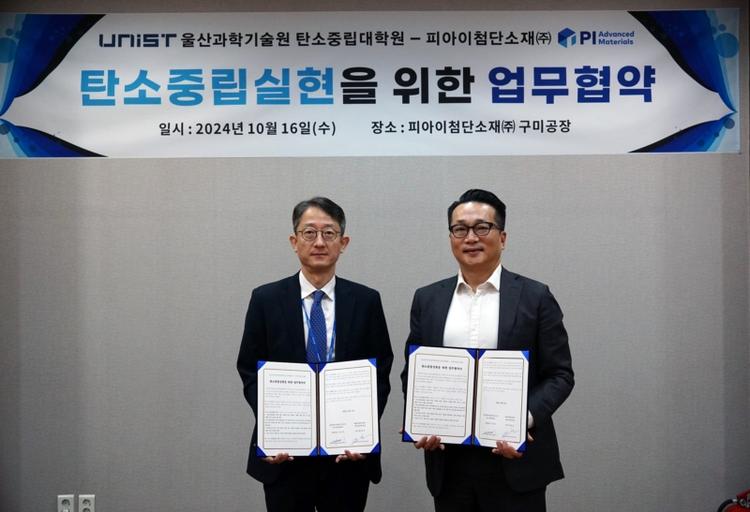
UNIST Graduate School of Carbon Neutrality will work with PI Advanced Materials Co., Ltd., the world's largest polyimide film market share, to develop technology to reduce carbon emissions. On October 16, the Graduate School of Carbon Neutrality and PI Advanced Materials Co., Ltd. entered into a business agreement to realize carbon neutrality. The two organizations worked together in various fields, including the development of carbon neutrality policies, joint research, and human resources development, aiming to commercialize carbon neutrality technology. The Graduate School of Carbon Neutrality at UNIST currently operates four research groups: △ Environmental Management and Policy Research △ Carbon dioxide capture, utilization, and storage (CCUS) technology △ Hydrogen and renewable energy technology. Based on its research capabilities, it plans to accelerate technology development in cooperation with PI advanced materials and actively apply research results to industrial sites. The two organizations plan to combine carbon-neutral technology with advanced materials to lead environmental issues and innovation. They plan to strengthen their global competitiveness by consolidating policy and technological cooperation and strive to realize carbon neutrality. "Cooperation with PI Advanced Materials Co., Ltd. will be an important milestone in the commercialization and research of carbon neutral technology," said Yongwon Seo, Head of Graduate School of Carbon Neutrality. "We hope that concrete results will be achieved starting with the agreement and that we will lead to a big change for a sustainable future." "Through cooperation with UNIST, we will strengthen policy and technological cooperation to realize carbon neutrality, which will mark a new turning point in achieving corporate carbon neutrality goals," said Heejoon Ham, Senior Vice President of PI Advanced Materials Co., Ltd. "We expect each other to grow in various aspects such as policy development, technological innovation, and talent training."

2024년 08월 09일 금요일

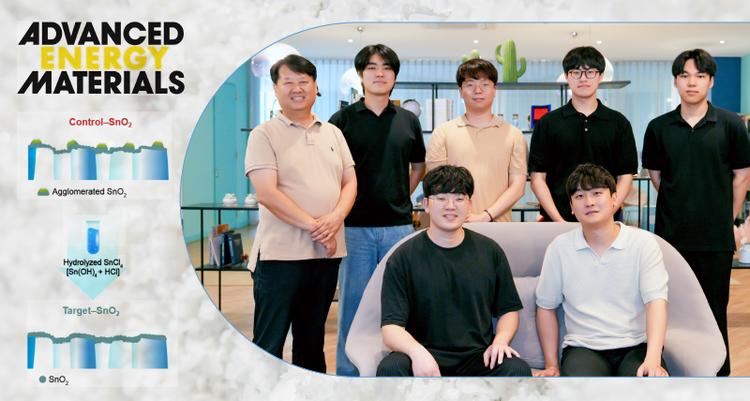
Cost-Effective Tin Chloride Boosts Efficiency of Perovskite Solar Cells

Abstract The prominent chemical bath deposition (CBD) method leverages tin dioxide (SnO2) as an electron transport layer (ETL) in perovskite solar cells (PSCs), achieving exceptional efficiency. The deposition of SnO2, however, can lead to the formation of oxygen vacancies and surface defects, which subsequently contribute to performance challenges such as hysteresis and instability under light-soaking conditions. To alleviate these issues, it is crucial to address heterointerface defects and ensure the uniform coverage of SnO2 on fluorine-doped tin oxide substrates. Herein, the efficacy of tin(IV) chloride (SnCl4) post-treatment in enhancing the properties of the SnO2-ETL and the performances of PSCs are presented. The treatment with SnCl4 not only removes undesired agglomerated SnO2 nanoparticles from the surface of CBD SnO2 but also improves its crystallinity through a recrystallization process. This leads to an optimized interface between the SnO2-ETL and perovskite, effectively minimizing defects while promoting efficient electron transport. The resultant PSCs demonstrate improved performance, achieving an efficiency of 25.56% (certified with 24.92%), while retaining 95.84% of the initial PCE under ambient storage conditions. Additionally, PSCs treated with SnCl4 endure prolonged light-soaking tests, particularly when subjected to quasi-steady-state-IV measurements. This highlights the potential of SnCl4 treatment as a promising strategy for advancing PSC technology. The commercialization of perovskite solar cells (PSCs) is anticipated to accelerate through the use of inexpensive tin (IV) chloride (SnCl4). A research team jointly led by Professor Dong Suk Kim from the Graduate School of Carbon Neutrality at UNIST and Dr. Yimhyun Jo from the Korea Institute of Energy Research (KIER) has significantly enhanced the stability of PSCs. By applying IV chloride to a layer of tin oxide, the team has improved the stability of these solar cells. To achieve high efficiency in PSCs, it is crucial to manage surface defects in the electron transport layer (ETL)—a thin film that facilitates the efficient extraction and transport of electrons. Such defects greatly influence both the stability and efficiency of PSCs. Figure 1. Schematic illustration of the SnCl4 treatment process applied to the SnO2 ETL prepared via the CBD method. The research team dissolved IV SnCl4 in water and applied it to the oxide layer. This process has resulted in the complete oxidation of the upper layer of tin oxide and facilitated recrystallization, leading to enhanced electron mobility. Figure 2. (Top) Storage stability of the PSCs tested in ambient condition (25 °C, 25% RH), (Center) Thermal stability of the PSCs subjected to thermal stress at 65 °C (25% RH). QSS J–V curves of the (Bottom) control- and d) target-PSCs. Chemical bath deposition (CBD) is a widely used approach that leverages tin dioxide (SnO2) as the electron transport layer (ETL) in PSCs, achieving exceptional efficiency. However, the deposition of SnO2 can lead to the formation of surface defects, which are inevitable due to the incomplete oxidation of tin. Addressing these defects post-film formation is vital for achieving both high efficiency and long-term stability. For the successful commercialization of PSCs, it is essential to pass various certification tests. The research team demonstrated the effectiveness of their approach by enhancing the electron transport layer (ETL) and showcasing long-term resistance to heat and ultraviolet exposure. Professor Kim stated, "Through this study, we succeeded in suppressing the aggregation of tin oxides and improving their crystallinity," adding, "This technology will play a pivotal role in enhancing the stability of solar cells." Researchers Ji Won Song and Dr. Yun Seop Shin noted, "We expect to positively impact the energy industry by simultaneously achieving high efficiency, durability, and low cost with affordable IV SnCl4." The findings of this research have been published online in Advanced Energy Materials on July 3, 2024. Journal Reference Ji Won Song, Yun Seop Shin, Minjin Kim, et al., "Post-Treated Polycrystalline SnO2 in Perovskite Solar Cells for High Efficiency and Quasi-Steady-State-IV Stability," Adv. Energy Mater., (2024).